
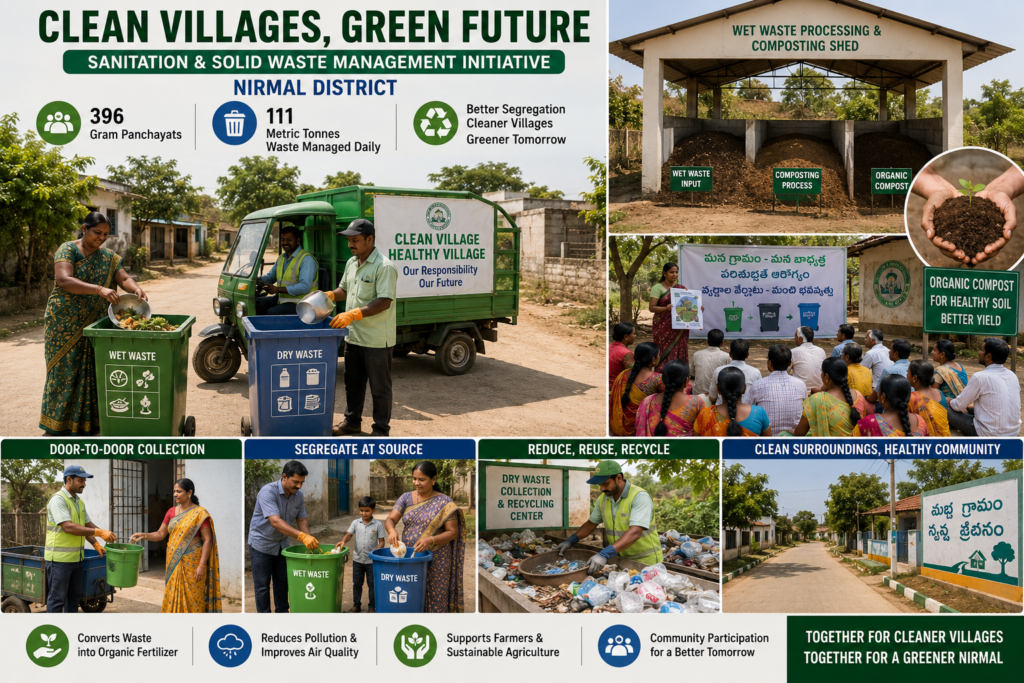
Gram Panchayats across Nirmal district have intensified sanitation and solid waste management initiatives as part of ongoing efforts to improve village cleanliness and promote sustainable environmental practices. The district’s 396 Gram Panchayats collectively manage around 111 metric tonnes of waste every day, making efficient waste handling a major priority.
To improve waste management systems, district officials have been conducting field inspections in villages to monitor segregation practices and ensure proper collection procedures. Households are being encouraged to separate wet and dry waste using designated green and blue collection methods.
The initiative focuses on reducing the amount of waste reaching dumping sites by promoting local processing and recycling. Special segregation and composting sheds established under a district-wide infrastructure program are helping convert biodegradable waste into organic fertilizer.
Officials believe this approach will not only reduce environmental pollution but also support agricultural activities by providing farmers with nutrient-rich compost. The system also helps minimize open waste burning, which can negatively affect air quality and public health.
Village authorities have been actively raising awareness among residents about responsible waste disposal and environmental conservation. Door-to-door collection services and improved monitoring mechanisms are being implemented to increase participation and maintain cleanliness standards.
The sanitation initiative reflects the district’s commitment to sustainable development and environmental protection. By combining waste segregation, compost production, and community participation, Nirmal’s villages are working toward cleaner surroundings, healthier communities, and a more environmentally responsible future.