Latest News

Nirmal Panchayats Strengthen Waste Management and Cleanliness Efforts

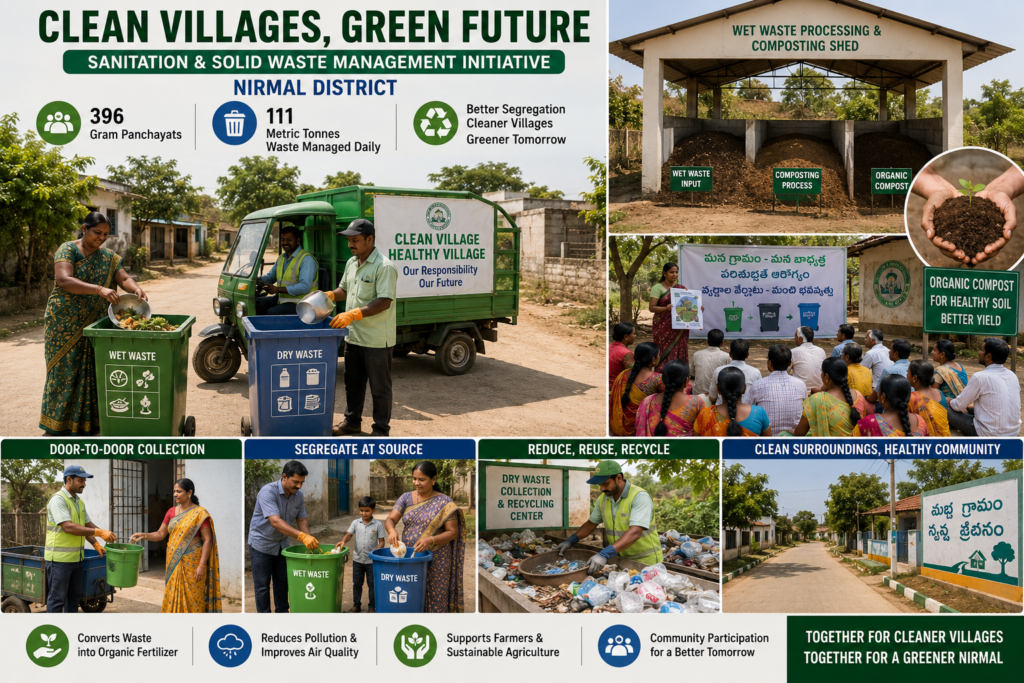
Gram Panchayats across Nirmal district have intensified sanitation and solid waste management initiatives as part of ongoing efforts to improve village cleanliness and promote sustainable environmental practices. The district’s 396 Gram Panchayats collectively manage around 111 metric tonnes of waste every day, making efficient waste handling a major priority. To improve waste management systems, district officials have been conducting field inspections in villages to monitor segregation practices and ensure proper collection procedures. Households are being encouraged to separate wet and dry waste using designated green and blue collection methods. The initiative focuses on reducing the amount of waste reaching dumping sites by promoting local processing and recycling. Special segregation and composting sheds established under a district-wide infrastructure program are helping convert biodegradable waste into organic fertilizer. Officials believe this approach will not only reduce environmental pollution but also support agricultural activities by providing farmers with nutrient-rich compost. The system also helps minimize open waste burning, which can negatively affect air quality and public health. Village authorities have been actively raising awareness among residents about responsible waste disposal and environmental conservation. Door-to-door collection services and improved monitoring mechanisms are being implemented to increase participation and maintain cleanliness standards. The sanitation initiative reflects the district’s commitment to sustainable development and environmental protection. By combining waste segregation, compost production, and community participation, Nirmal’s villages are working toward cleaner surroundings, healthier communities, and a more environmentally responsible future.

Nirmal Panchayats Strengthen Waste Management and Cleanliness Efforts Read More »
Unsafe Classrooms Repaired Ahead of New Academic Year

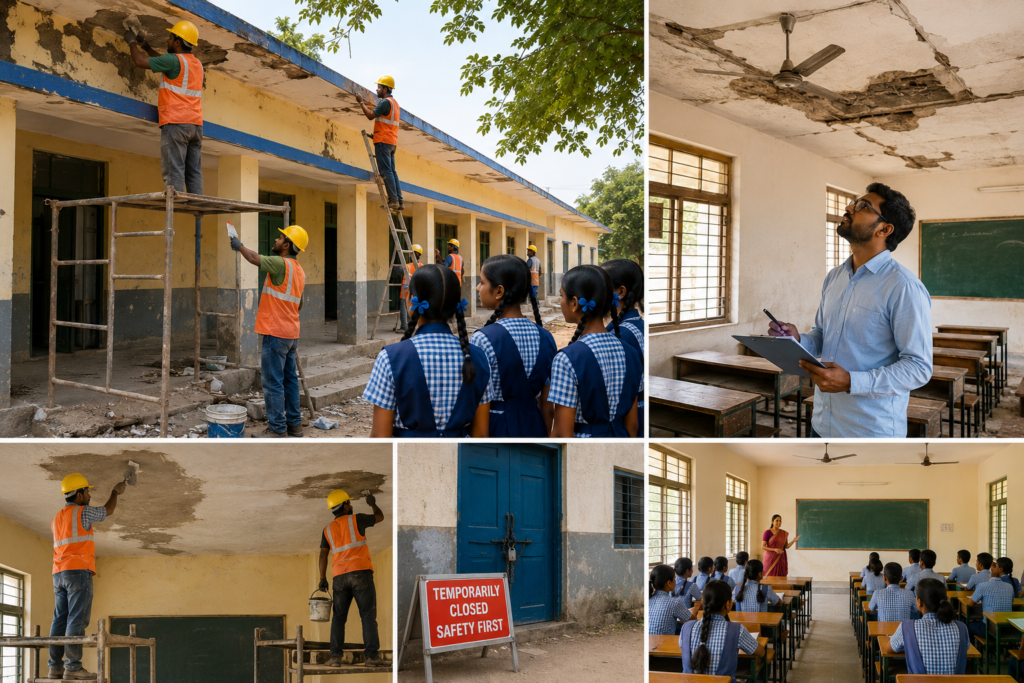
Authorities in Nirmal and Adilabad districts have undertaken a large-scale infrastructure improvement drive to ensure student safety before the commencement of the new academic year. The initiative followed structural audits that identified more than 250 classrooms requiring urgent repairs due to damage and deterioration. Education and engineering officials conducted detailed inspections of government school buildings to assess risks associated with weakened walls, damaged roofs, and other structural issues. Based on the findings, immediate repair and restoration work was initiated across affected schools. Special teams were deployed to strengthen walls, repair ceilings, improve structural stability, and address other safety concerns. Buildings considered unsafe for occupation were temporarily closed and secured until necessary corrective measures could be completed. Officials emphasized that student safety remains a top priority and that no compromises would be made regarding infrastructure standards. The rapid-response repair campaign was designed to ensure that schools were fully prepared to welcome students back in a safe and secure environment. Parents and local communities appreciated the timely intervention, noting that well-maintained educational facilities contribute significantly to effective learning. The initiative also reflects broader efforts to improve public education infrastructure and create better learning conditions for students. Authorities have indicated that periodic inspections will continue in the future to identify maintenance needs early and prevent safety risks from developing. The repair drive represents an important step toward strengthening educational infrastructure and ensuring that students have access to safe classrooms throughout the academic year.

Unsafe Classrooms Repaired Ahead of New Academic Year Read More »

Three ‘Young India’ Residential Schools Approved for Region

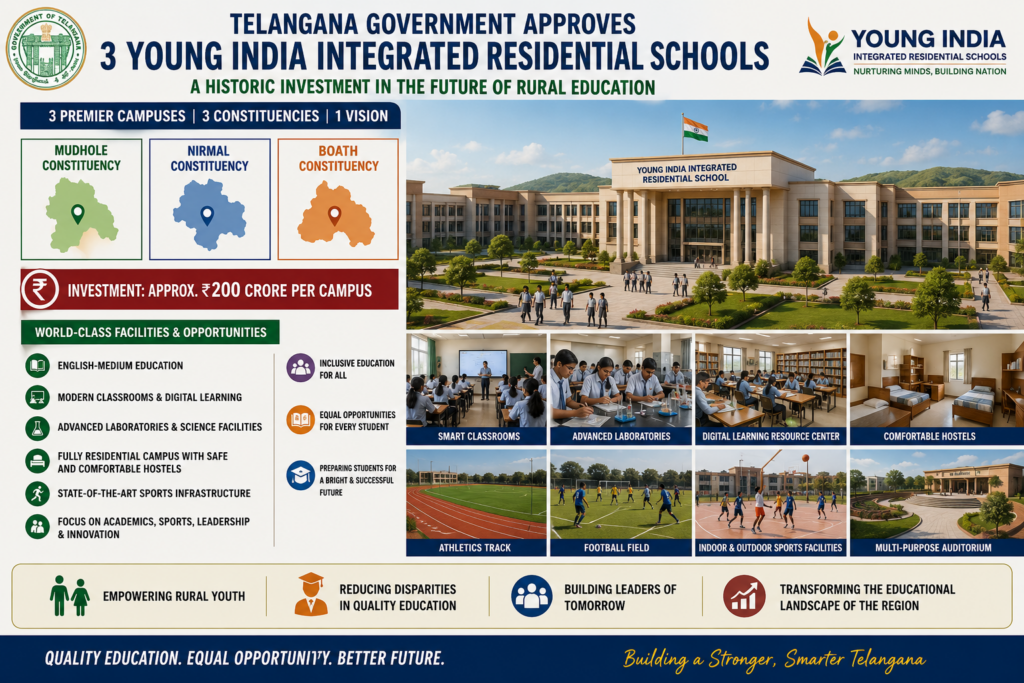
The Telangana government has approved the establishment of three large-scale Young India Integrated Residential Schools in the Mudhole, Nirmal, and Boath constituencies, marking one of the most significant educational investments in the region’s history. Each campus is expected to receive an investment of approximately ₹200 crore and will be developed as a modern educational hub equipped with advanced academic and extracurricular facilities. The initiative is part of the government’s broader vision to provide high-quality education to students from rural and economically disadvantaged backgrounds. The schools will offer English-medium instruction, modern classrooms, digital learning resources, well-equipped laboratories, residential facilities, and comprehensive sports infrastructure. Officials say the objective is to create institutions that can match the standards of premium private schools while remaining accessible to deserving students. A key feature of the initiative is its focus on inclusive education. The integrated model aims to bring together students from diverse backgrounds and provide equal opportunities for academic growth and personal development. Education experts believe that the project has the potential to transform the educational landscape of the region by reducing disparities in access to quality learning. The campuses are also expected to nurture talent in academics, sports, leadership, and innovation. Local communities have welcomed the announcement, viewing it as a major opportunity for rural students to receive world-class education closer to home. Once operational, the institutions are expected to play a vital role in shaping future generations and improving educational outcomes across the district.

Three ‘Young India’ Residential Schools Approved for Region Read More »

Babapur Village Adopts Government Schools for All Children

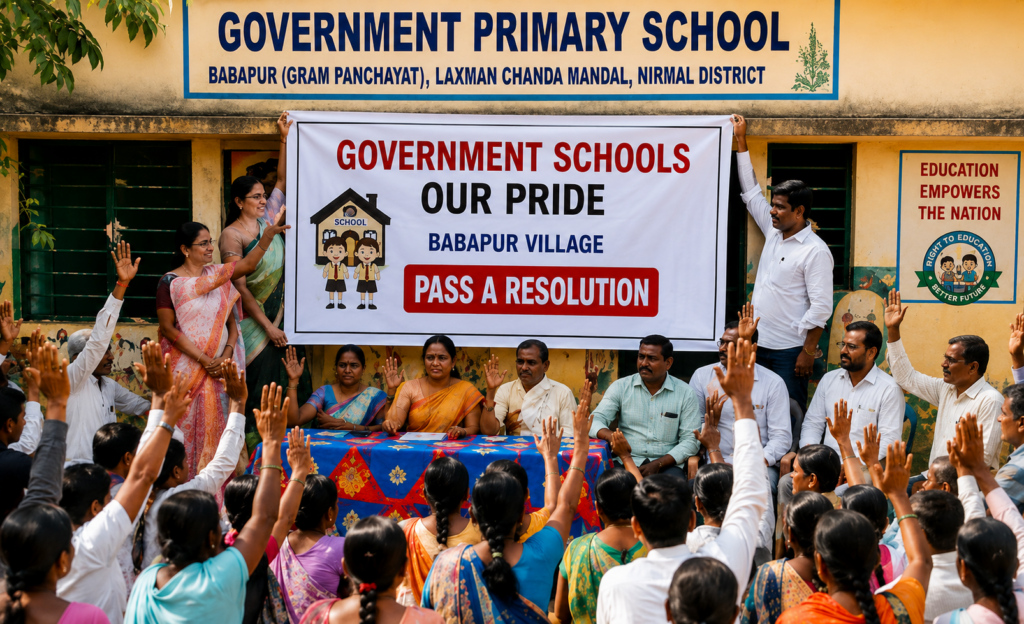
In a landmark decision aimed at strengthening public education, residents of Babapur village in Lakshmanachanda mandal have unanimously resolved to enroll all local children in government-run schools. The move has drawn attention across the district as a unique community-driven effort to promote quality public education and reduce dependence on private institutions. Village leaders, parents, and community members collectively agreed that government schools now offer improved infrastructure, better facilities, and access to experienced teaching staff. Residents expressed confidence in the ability of government educators to provide quality instruction and holistic development for students. The initiative is being led by Village Sarpanch Padigela Lakshmi, who emphasized the importance of community participation in strengthening educational institutions. Villagers believe that concentrating student enrollment in public schools will encourage authorities to invest further in infrastructure, technology, and academic resources. Supporters of the resolution argue that the decision will help ensure equal educational opportunities for children from all economic backgrounds. By promoting a common schooling system, the village hopes to create a more inclusive educational environment and reduce financial pressure on middle-class and low-income families. The decision has been widely appreciated as an example of collective responsibility and community leadership. Education officials have welcomed the initiative and expressed optimism that it could inspire similar efforts in other villages. If successful, Babapur could emerge as a model for public education reform, demonstrating how community support can play a vital role in strengthening government schools and improving educational outcomes.

Babapur Village Adopts Government Schools for All Children Read More »

₹225 Crore Mega Redevelopment Project Begins at Basar Temple

A major transformation project has been launched at the historic Sri Gnana Saraswathi Temple with the foundation stone laid for a ₹225 crore redevelopment initiative aimed at enhancing the temple’s infrastructure and pilgrim facilities. The ambitious project seeks to significantly expand the temple complex, increasing its overall footprint to nearly three times its current size. The master plan includes the construction of a grand nine-story northern Rajagopuram, additional seven-story towers in other directions, and expansion of the sanctum and adjoining mandapam areas. Authorities stated that the redevelopment has been designed to preserve the temple’s spiritual and cultural significance while improving the experience of devotees. The project is expected to accommodate the growing number of pilgrims who visit Basar each year, especially families participating in the traditional Aksharabhyasam ceremony. The timing of the project is particularly important as preparations begin for the upcoming 2027 Godavari Pushkaralu festival, which is expected to attract large crowds from across the country. Improved infrastructure, visitor amenities, and crowd management facilities are expected to play a crucial role during the event. Local residents, devotees, and tourism stakeholders have welcomed the initiative, expressing hope that it will boost religious tourism and regional development. Once completed, the redevelopment project is expected to transform Basar into a world-class pilgrimage destination while preserving its rich heritage and spiritual legacy.

₹225 Crore Mega Redevelopment Project Begins at Basar Temple Read More »

Listings
News
Home
Jobs
Contact