
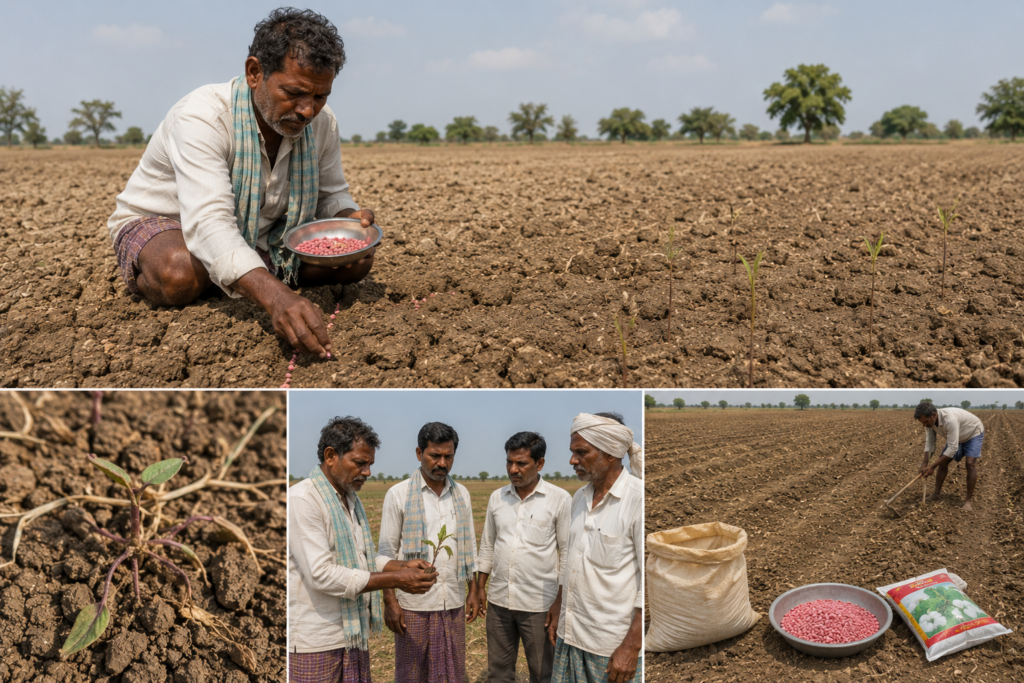
Farmers across Nirmal district are facing mounting challenges during the ongoing Kharif season as poor rainfall and prolonged dry conditions have led to widespread cotton seed germination failures. Many cultivators who sowed their fields in anticipation of timely monsoon showers are now being forced to undertake re-sowing operations, resulting in additional financial burdens.
According to farmers, the initial sowing was carried out after receiving early rainfall, but the subsequent dry spell prevented adequate soil moisture from being maintained. As a result, a significant portion of the cotton seeds either failed to germinate or produced weak plant growth, making it necessary for farmers to replant their fields.
The unexpected setback has increased cultivation expenses considerably. Farmers now have to purchase fresh seed stocks, arrange labor for re-sowing, and spend additional amounts on fertilizers, fuel, and other agricultural inputs. Many cultivators have expressed concern that the extra expenditure will affect their profitability, especially if weather conditions remain uncertain.
Agricultural experts note that cotton crops require consistent moisture during the germination stage. Extended dry periods immediately after sowing can severely impact crop establishment and reduce overall productivity. Officials are monitoring field conditions and advising farmers to assess soil moisture levels carefully before undertaking further sowing activities.
The situation has created anxiety among farming communities, as successful crop establishment during the early season is critical for achieving good yields later in the year. Farmers are hoping for widespread and timely rainfall in the coming weeks to stabilize crop growth and prevent further losses.
The episode highlights the growing challenges posed by erratic weather patterns and their impact on agricultural planning, costs, and rural livelihoods in the district.